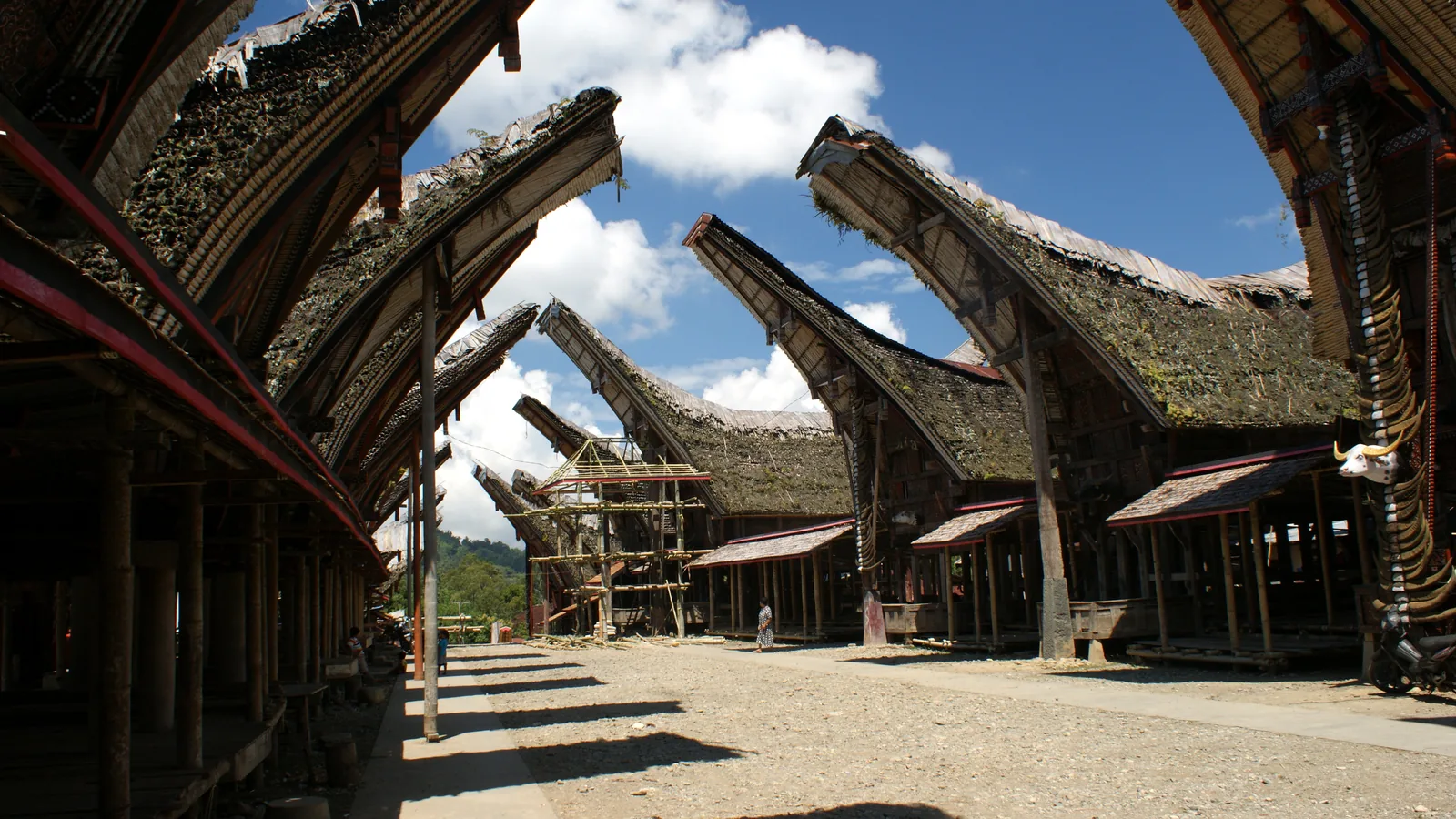
Tana Toraja is a highland region in South Sulawesi, Indonesia, that rewards travellers with extraordinary cultural depth. Here is a practical guide to the sites you should not miss.
Kete Kesu Village
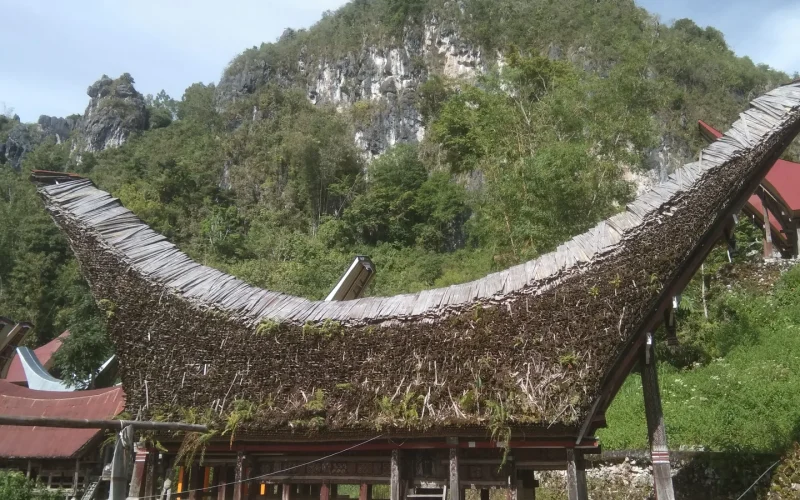
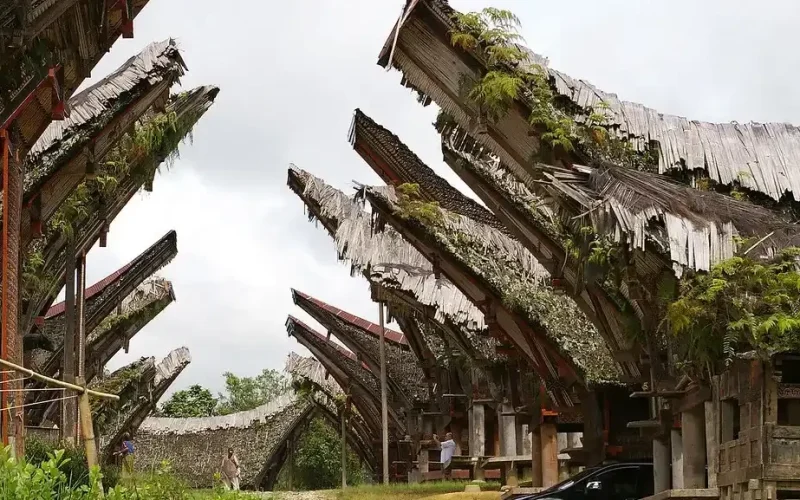
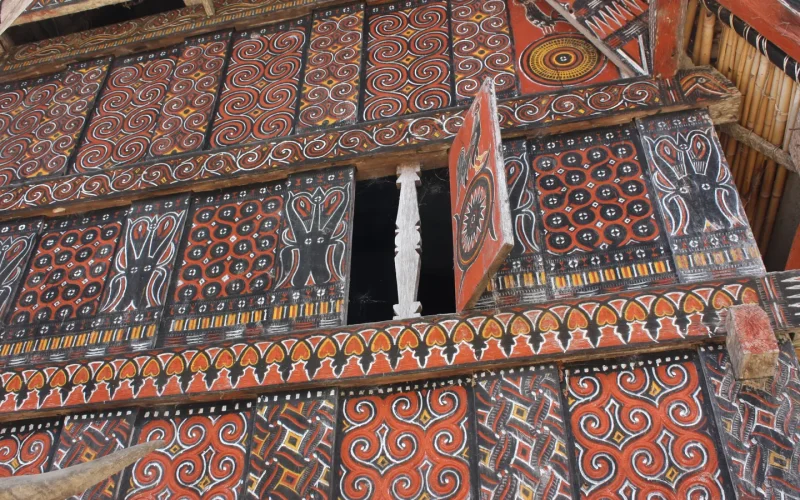
Kete Kesu is the most visited traditional village in Toraja, located 5 kilometres south of Rantepao. The row of tongkonan (traditional houses) and rice barns facing each other across a ceremonial field is one of the most photographed scenes in Sulawesi. Behind the village, a limestone cliff contains hanging coffins and skulls visible through the rock face. Entry is free but a donation to the village is customary.
Lemo Cliff Graves
At Lemo, niches carved into a sheer limestone cliff hold the coffins of Toraja nobility. Standing before each niche is a tau-tau — a life-size carved wooden effigy of the deceased. The effigies wear clothes changed periodically by family members. Visiting at dawn or late afternoon gives the best light for photography.
Bori Kalimbuang Megalith Field
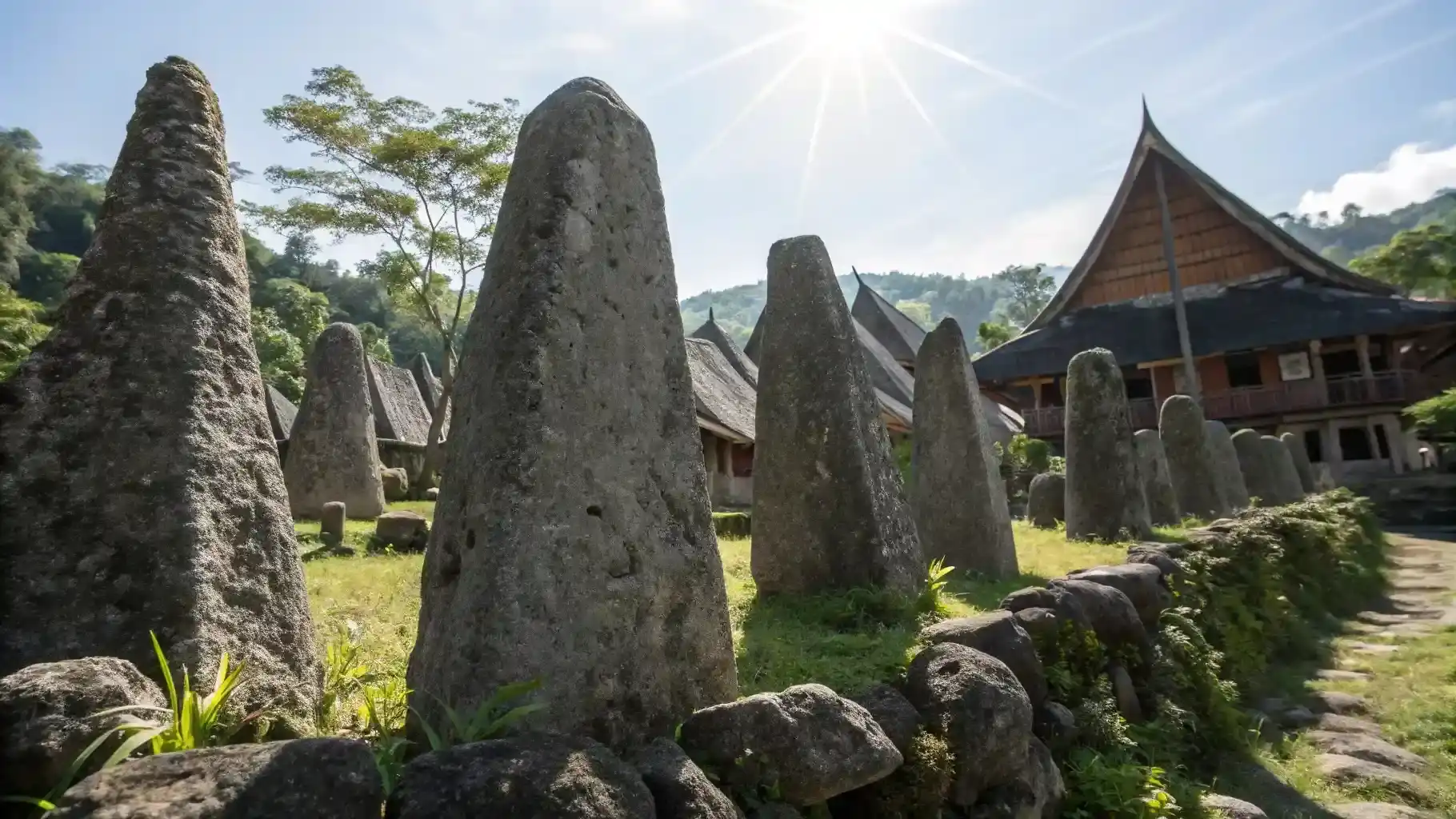
One of Toraja’s most striking and least-understood sites: a field of 102 standing stones (menhir), each erected to commemorate a funeral ceremony of a noble family. The stones range from small markers to monoliths over two metres tall. Ceremonies and dances still take place here.
Batutumonga
Drive 25 kilometres north of Rantepao to reach the highland village of Batutumonga (1,400m altitude). The views across the Toraja valley are exceptional. Stay for sunset or sunrise if possible. A network of trekking trails runs from here through highland villages.
Rantepao Market (Pasar Bolu)
Held every six days, the Rantepao market is one of the most vibrant traditional markets in Indonesia. The buffalo section — where animals valued for ceremonial use are traded — is particularly remarkable. Arrive early (07:00–09:00) when activity is at its peak.
Sa’dan Weaving Village
Sa’dan, 20 kilometres north of Rantepao, is the centre of traditional Toraja weaving. Women work on backstrap looms producing distinctive geometric cloth. Scarves and cloth pieces can be purchased directly from the weavers. The village is small and genuinely active — this is not a staged demonstration.
Pa’dan Hanging Graves
Coffins suspended by wood and rope on a near-vertical cliff face. Some coffins are several hundred years old and have partially disintegrated, their contents visible. One of the more dramatic burial sites in Toraja.
Planning Your Toraja Visit
Allow a minimum of three days to cover the main sites. Five days gives you the pace to properly absorb the culture and catch a ceremony if one is taking place. Contact TourtoRaja for a customised itinerary.
Travel times, flight schedules, opening conditions, ceremony dates and prices change. Confirm the details that matter to your trip when you enquire.