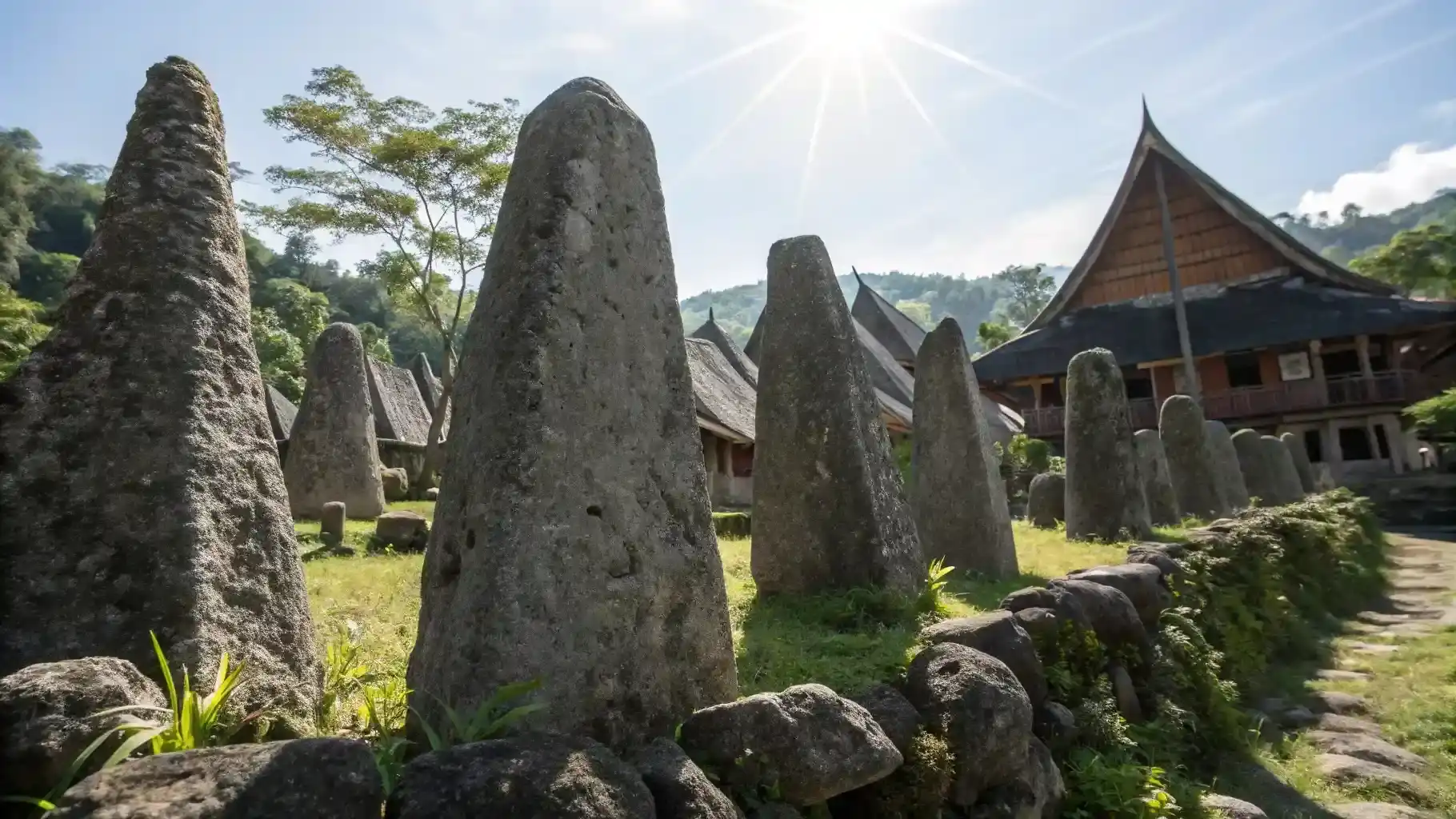
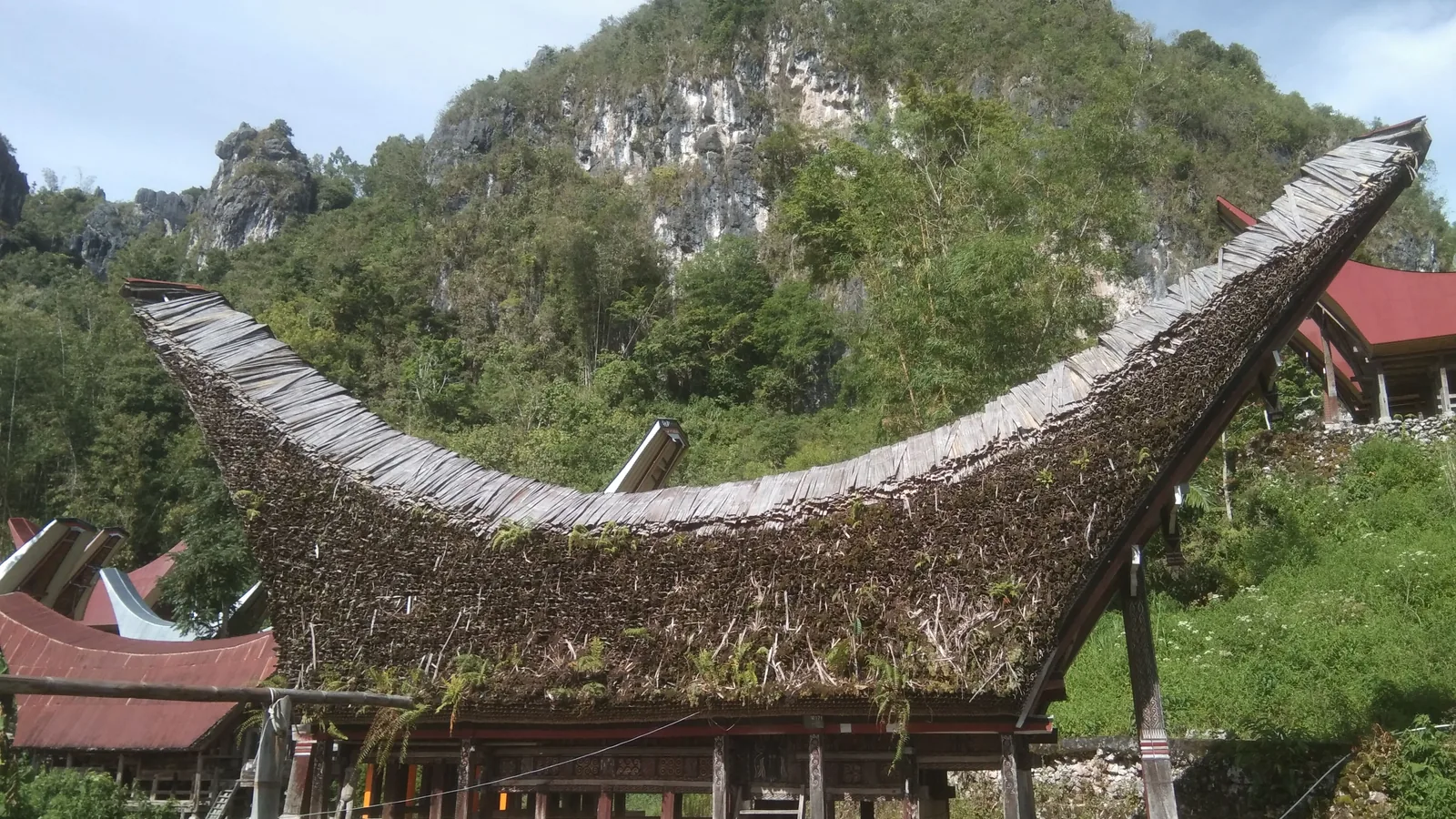
The tongkonan is the defining architectural symbol of Tana Toraja — a house so distinctive in form that it appears on Indonesian currency, in museum exhibitions worldwide, and in every photograph taken in the Toraja highlands. Understanding what the tongkonan represents culturally makes every village visit significantly richer.
What is a Tongkonan?
The word tongkonan derives from tongkon — “to sit together.” The tongkonan is not primarily a house in the Western sense; it is a clan house, a ceremonial venue, and a statement of ancestral identity. Every Torajan person belongs to a tongkonan — sometimes several, through different ancestral lines.
Architecture and Design
The roof: The most dramatic feature is the dramatically upswept roof, rising at both front and back like the prow of a boat. This boat imagery is intentional — Toraja oral history holds that their ancestors arrived by boat. The roof was traditionally constructed from bamboo tiles and can last 30–50 years if maintained.
The facade: Every surface of the front wall is covered in carved panels painted in four colours: black (death), red (life), yellow (divine blessing), and white (purity). The patterns (called pa’) represent buffalos, roosters, geckos, and abstract geometric forms, each with specific symbolic meaning.
Buffalo horns: The accumulation of buffalo horns on the front post (central supporting pillar) records the number of buffalos sacrificed at ceremonies hosted by this tongkonan over the generations. A post covered to the roofline with horns indicates an extremely high-status family.
The Rice Barn (Alang Sura)
Opposite every tongkonan stands the alang sura — the rice barn. It is structurally similar to the tongkonan but smaller, and stands on posts to keep rice dry and protected from rodents. The two structures — house and barn — face each other across a ceremonial ground in the traditional village layout.
The Three Types of Tongkonan
Toraja tradition recognises three categories: tongkonan layuk (the highest, associated with governance), tongkonan pekamberan (associated with religious authority), and tongkonan batu (the most common, family houses). Only families of the highest rank can build a tongkonan layuk.
Travel times, flight schedules, opening conditions, ceremony dates and prices change. Confirm the details that matter to your trip when you enquire.