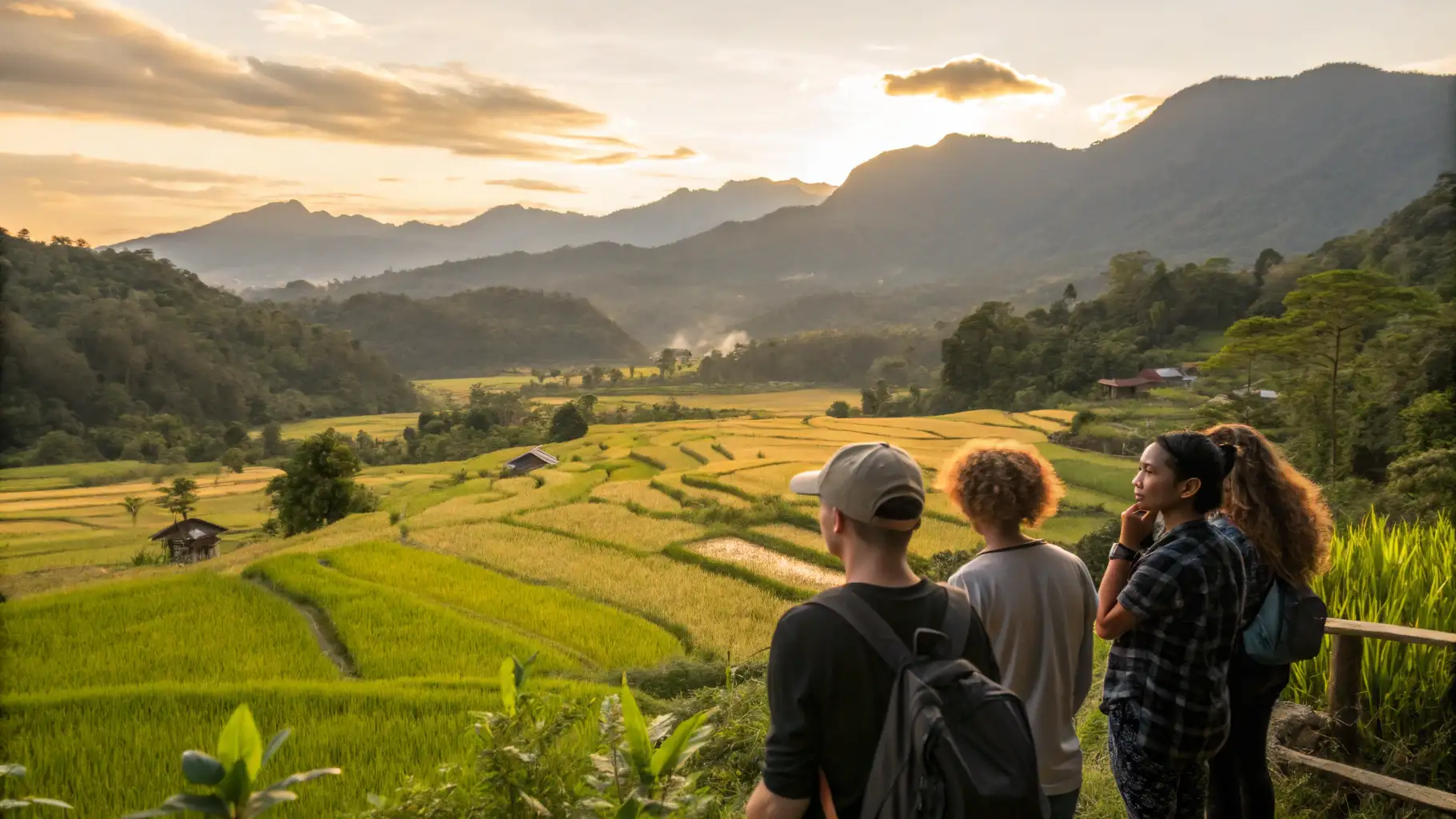
A Batutumonga Morning Walk
The highland viewpoint is within 20 minutes of several working farms
Coffee Tour
Working Farms Above 1,200 Metres
Toraja Arabica coffee is one of Indonesia’s most prized single-origin coffees, grown at altitudes between 1,200 and 1,800 metres in the highland regency of Tana Toraja, South Sulawesi. A Toraja coffee farm tour combines direct access to working highland farms with the broader highland landscape that makes Toraja such a remarkable destination.
1,200–1,800 m
Growing altitudeMay–Aug
Harvest season, approximatelySep–Dec
Post-harvest, excellent for tastingHalf-Day
Standalone farm and tasting visitIn Short
A coffee farm tour with TourtoRaja visits working Arabica farms in the highland areas above Rantepao. The visit is arranged with local farming families, not at a commercial showroom.
Terroir
Toraja Arabica grows at high altitude in volcanic soil with a naturally cool climate — ideal conditions that produce coffee with a distinctive flavour profile: low acidity, full body, earthy depth, and complex notes of dark chocolate, dried fruit, and spice. Unlike Kopi Luwak (which relies on civet processing), Toraja coffee quality comes entirely from terroir and the growing conditions of the highland environment.
Toraja has been producing quality coffee since Dutch colonial times. The highlands were among the first areas in Indonesia developed for Arabica production, and the coffee tradition is now intertwined with the local economy and culture — many farming families have worked the same coffee plots for multiple generations.
Toraja Arabica is exported under various regional names: Toraja Kalosi (referring to the Kalosi area in neighbouring Enrekang), Toraja Sapan, and various single-farm micro-lots sourced by specialty roasters. The best lots reach international specialty coffee buyers in Japan, the Netherlands, and Australia, where they are sold as premium single-origins.
Toraja Kalosi · Toraja Sapan · Single-Farm Micro-Lots
The Visit
A coffee farm tour with TourtoRaja visits working Arabica farms in the highland areas above Rantepao. The visit is arranged with local farming families, not at a commercial showroom.
Combining
Coffee farms in Tana Toraja are positioned in the highland terrain that also contains the best trekking routes and many cultural sites. A half-day coffee tour pairs naturally with:
The highland viewpoint is within 20 minutes of several working farms
On the way up or down from the highland farms — tongkonan clusters and traditional life are visible throughout the highland road
If a ceremony is taking place during your visit, a morning coffee farm tour leaves the afternoon free for cultural activities
Farms are accessible year-round. The harvest season (approximately May–August) offers the most active farm experience with cherry picking possible. Post-harvest (September–December) is when the year’s crop has been processed and roasted, making it an excellent time for tasting.
Most visitors combine the coffee farm with the full-day highland program. If you are specifically interested in the coffee and have limited time, a focused half-day coffee farm and tasting visit can be arranged independently.
Keep Exploring
Book a Toraja Coffee Tour
Coffee farm visits can be booked as a standalone half-day activity or combined with any TourtoRaja multi-day package. All tours are private.