
Dry Season
Ceremonies concentrate in the dry season (June–September) when roads are passable and guests can travel.
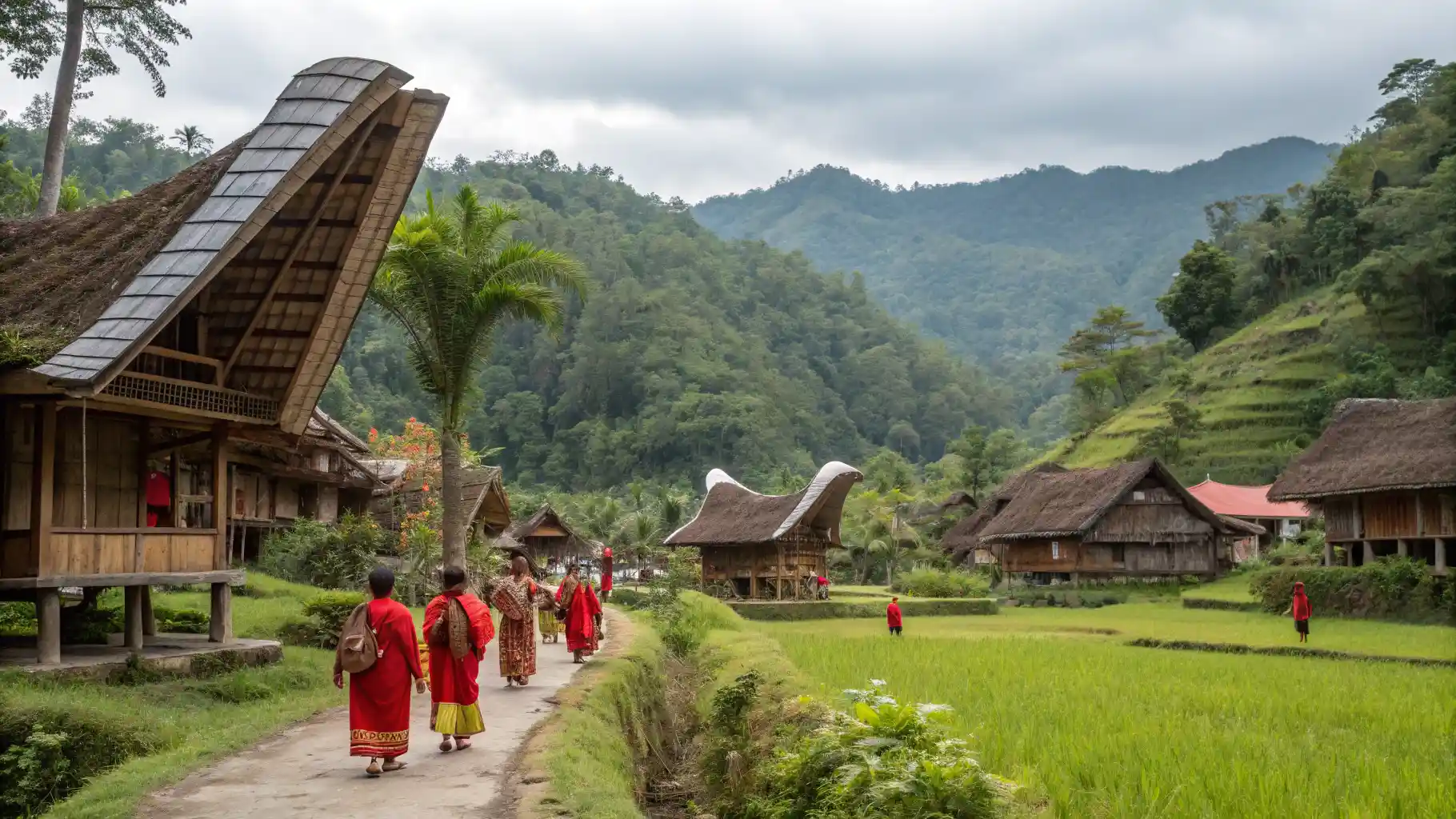
Rambu Solo
Witness Rambu Solo With TourtoRaja
The Toraja funeral ceremony — called rambu solo in the Sa’dan Toraja language — is one of the most extraordinary cultural events in Southeast Asia. It is not a tourist attraction. It is a living ritual at the heart of Toraja identity, and attending one with a knowledgeable local guide is among the most memorable experiences available to a traveller in Indonesia.
Jun–Sep
Dry season, when ceremonies concentrateJul & Aug
Peak ceremony months2–4 Hours
A respectful ceremony visit2–3
Ceremonies commonly attended in a peak-season weekCeremony visits depend on timing and the hosts’ consent; attendance cannot be guaranteed. Ceremonies are not fixed tourist attractions.
In Short
It is not a tourist attraction. It is a living ritual at the heart of Toraja identity, and attending one with a knowledgeable local guide is among the most memorable experiences available to a traveller in Indonesia.
The Ceremony
In the Toraja belief system (Aluk Todolo — “The Way of the Ancestors”), death is not a sudden event but a gradual transition. When someone dies, they are considered ma’kula (ill or weakening) until the full funeral ceremony is completed. During this period — which can last weeks, months, or even years while the family prepares and saves money — the deceased is kept at home, tended to, and spoken to by family members as if still alive.
The funeral ceremony itself is a multi-day event that fulfils the obligations of family, demonstrates community solidarity, and provides the social and spiritual resources the deceased needs for the journey to Puya (the afterlife). The scale of the ceremony reflects the status of the deceased: a high-status community elder may have a week-long ceremony attended by hundreds of people from across Sulawesi and the wider Toraja diaspora, involving the sacrifice of dozens of water buffalo.
Water buffalo (tedong) are central to Toraja funeral ceremonies. They are the spiritual vehicle that guides the soul of the deceased to Puya. The number of buffalo sacrificed — and the quality of the animals, particularly those with the distinctive piebald black-and-white pattern called tedong bonga — reflects the family’s status and ensures a dignified passage for the deceased.
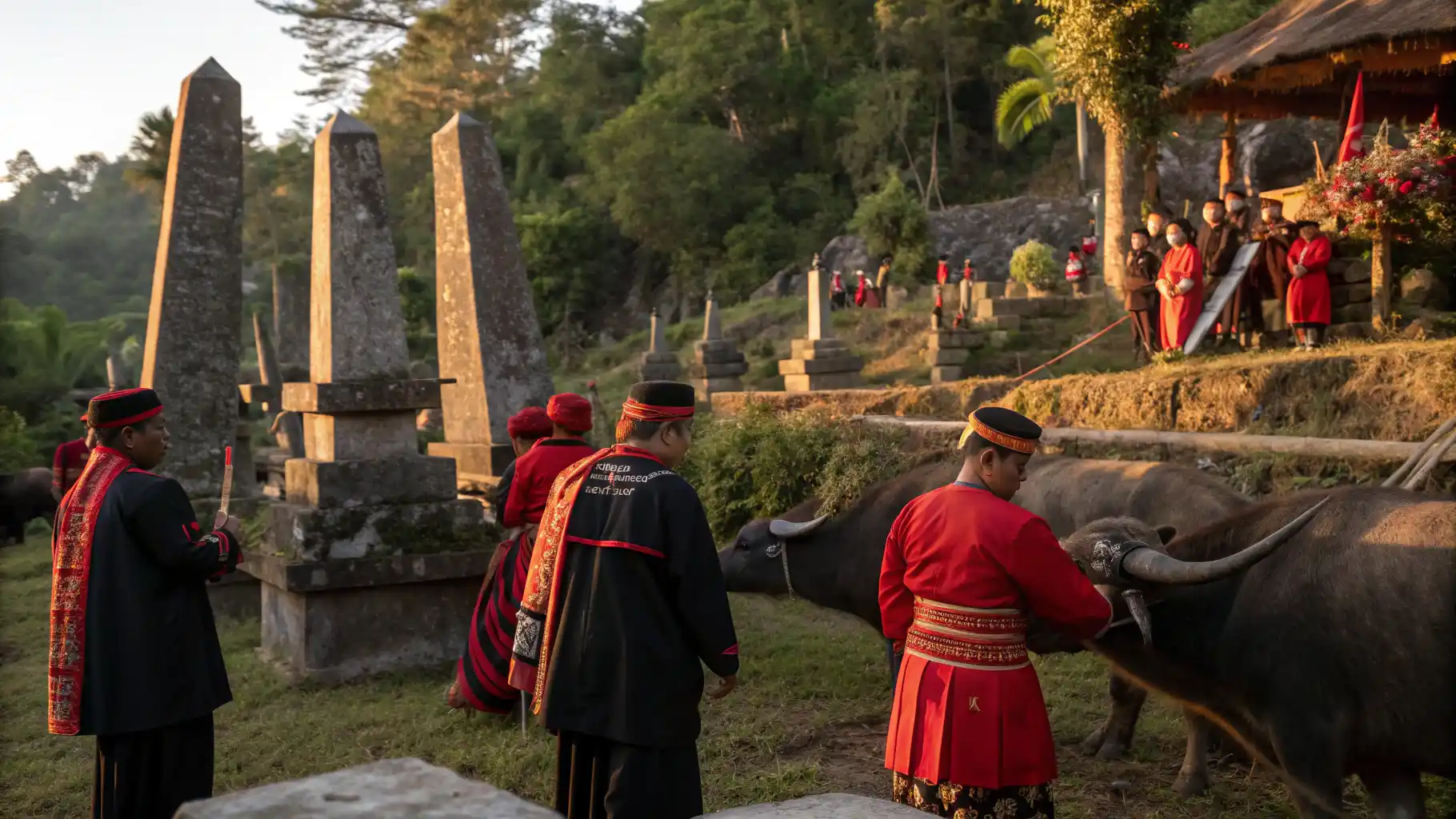
The Role Of The Water Buffalo
The Sequence
Toraja funerals typically unfold over several days and follow a structured sequence:
Day 1
The coffin, wrapped in red cloth and placed in a carved wooden effigy boat, is carried from the family home to the ceremonial field in a procession accompanied by music, weeping, and chanting (ma’badong)
Hundreds of guests arrive bearing gifts — live buffalo, pigs, and cartons of cigarettes — which are formally recorded by a family secretary. Gift-giving and receiving is a social obligation with reciprocal implications across generations
Buffalo are displayed in the ceremonial arena and their quality assessed by community members. The finest tedong bonga may be traded for sums equivalent to a small car
Traditional music (pa’pompang bamboo flute ensemble, ma’dandan chanting) and funeral dances (pa’randing warrior dance) are performed
Final day
The coffin is carried to the cliff grave or family burial cave, accompanied by the entire community
Visitor Protocol
Toraja families genuinely welcome respectful visitors at funeral ceremonies — outsiders are considered to bring blessings and add to the ceremony’s prestige. The key word is respectful. TourtoRaja provides a full cultural briefing before every ceremony visit:
Timing
Funeral ceremonies occur throughout the year but concentrate in the dry season (June–September) when roads are passable and guests can travel.
Ceremonies concentrate in the dry season (June–September) when roads are passable and guests can travel.
July and August are peak ceremony months.
Your guide will know which ceremonies are happening during your specific travel dates.
In peak season, it is common to attend two or three during a week’s visit.
Keep Exploring
Book a Toraja Funeral Ceremony Tour
All TourtoRaja ceremony tours are private and guided. Prices on request based on your travel dates and group size.