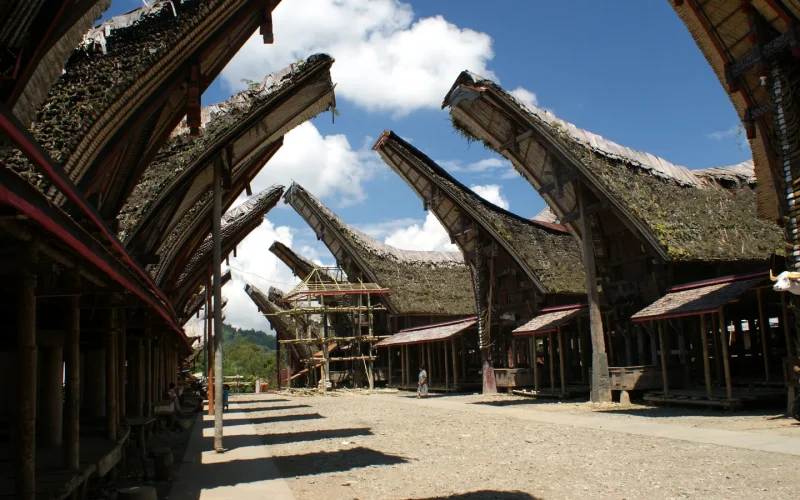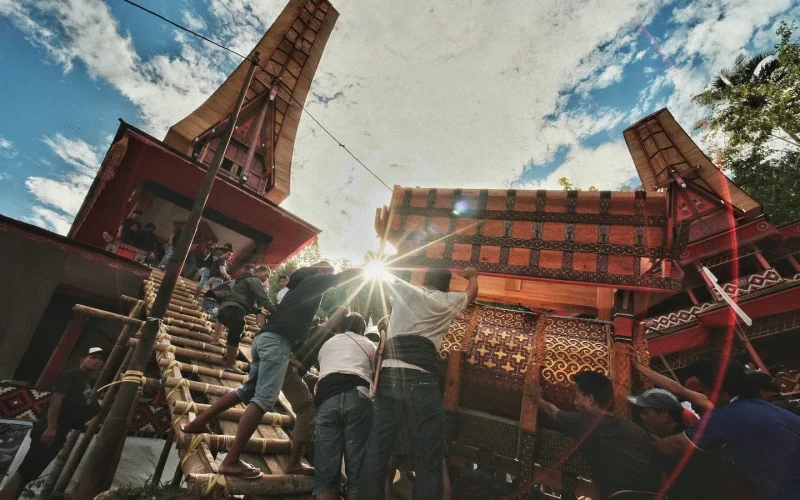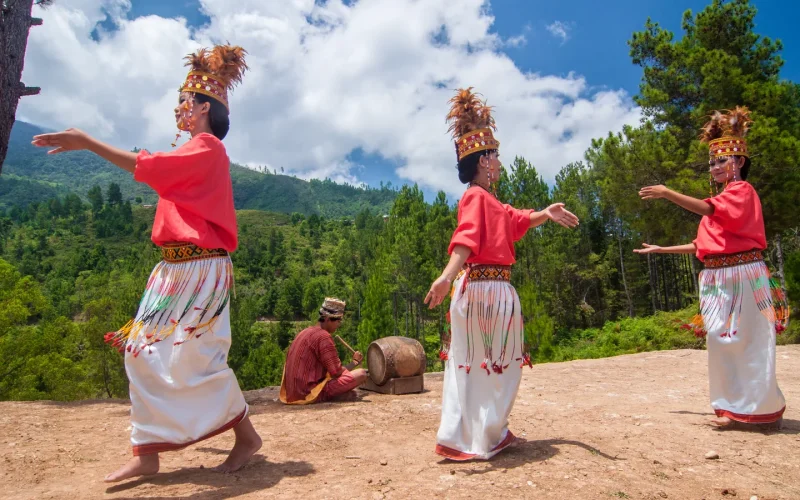
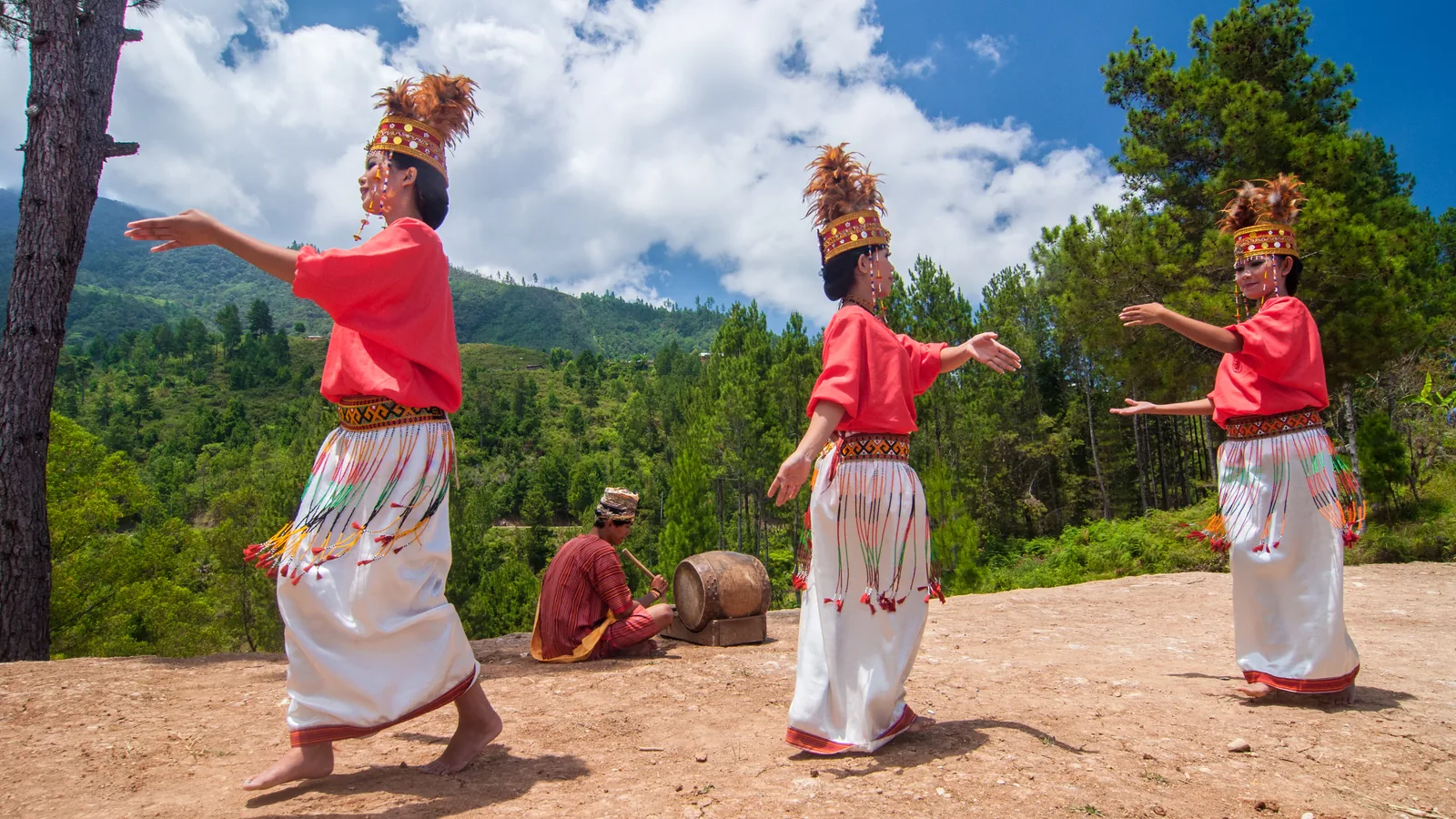
The Toraja people number approximately 650,000 and are concentrated in Tana Toraja (Tanah Toraja) and North Toraja (Toraja Utara) regencies of South Sulawesi. They are distinct from other Sulawesi peoples in language, architecture, and their extraordinarily elaborate relationship with death and the afterlife.
Origins and History
The ancestors of the Toraja people are believed to have migrated from Southeast Asia through what is now the Philippines to Sulawesi, arriving by sea — a journey reflected in the boat-shaped roofs of the tongkonan. Written historical records of the Toraja people begin with Dutch colonial presence in the early 20th century, when the Dutch brought Toraja into their colonial sphere (1906) and Christian missionaries followed.
Aluk Todolo: The Ancient Belief System
Before the arrival of Christianity (and later Islam), the Toraja people followed Aluk Todolo (“the way of the ancestors”) — an animist belief system governing every aspect of life: agriculture, architecture, ceremonies, and death. Aluk Todolo divided the universe into the realm of the living and the realm of the dead, with a series of prescribed rituals maintaining balance between them.
Today, the majority of Torajans identify as Christian (primarily Protestant and Catholic). However, the practices of Aluk Todolo are deeply embedded in Toraja ceremonial life, and the funeral ceremonies, house-building rituals, and agricultural ceremonies observed today retain strong pre-Christian elements even when conducted within a Christian framework.
Social Structure
Traditional Toraja society was hierarchical: tana’ bulaan (nobility, highest rank), tana’ bassi (lesser nobility), tana’ karurung (commoners), and tana’ kua-kua (former slaves). This hierarchy determined the scale of funeral ceremonies required, types of graves allowed, and the architectural features of the family tongkonan.
While strict enforcement of this hierarchy has diminished under modern law and Christian influence, social status remains significant in ceremonial contexts.
Modern Toraja
Many Torajans work in Indonesian cities — Jakarta, Makassar, Surabaya — returning home for major ceremonies. Toraja diaspora communities are significant in the Netherlands (due to colonial ties) and Malaysia. The flow of money from urban Torajans back to their home villages funds the elaborate ceremonies that continue to define Toraja culture.
Travel times, flight schedules, opening conditions, ceremony dates and prices change. Confirm the details that matter to your trip when you enquire.