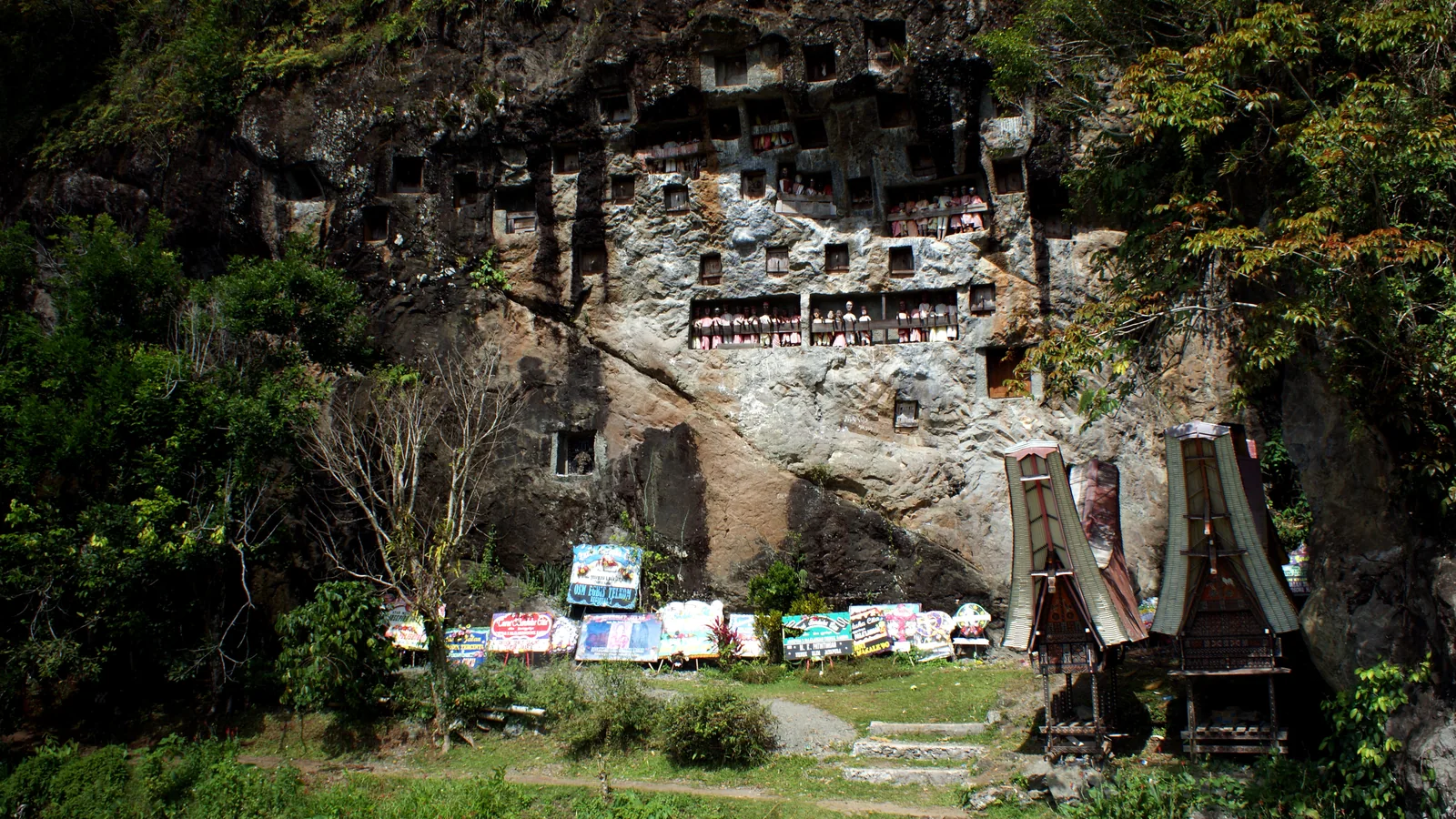
Lemo is one of the most visually striking sites in Tana Toraja — a sheer limestone cliff face studded with carved burial niches, each containing a coffin and guarded by a tau-tau (life-size wooden effigy). It is one of the defining images of Toraja tourism and deserves more than a quick photo stop.
What Are the Tau-Tau?
The tau-tau are wooden figurines carved in the likeness of the deceased. They are dressed in traditional clothes by family members, sometimes updated with new garments. The eldest and most senior figures wear the most elaborate dress. At Lemo, the niches are arranged in clusters by family, with tau-tau ranging from recent figures to ancient, weathered ones whose faces have faded to near abstraction.
The Carved Niches
Niches at Lemo were carved by specialist craftsmen, a task that could take weeks. The size and height of the niche reflected the status of the deceased — higher niches were reserved for higher-ranking individuals, as elevation symbolised proximity to the divine realm (deata). Only nobility (tana’ bulaan or tana’ bassi) could be buried at Lemo in traditional times.
What Has Changed
The upper sections of the cliff are the oldest, with tau-tau that are several hundred years old. More recent burials are at lower elevations. Some tau-tau have been stolen over the decades — their empty niches visible — and several are now held in museums abroad. The surviving effigies at Lemo are closely monitored by the community.
Practical Information
- Location: 12 km south of Rantepao, near Makale
- Entry fee: Small entrance fee payable at the site
- Best time to visit: Morning light falls directly on the cliff — arrive before 10:00 for photography
- Time needed: 45–60 minutes
Travel times, flight schedules, opening conditions, ceremony dates and prices change. Confirm the details that matter to your trip when you enquire.