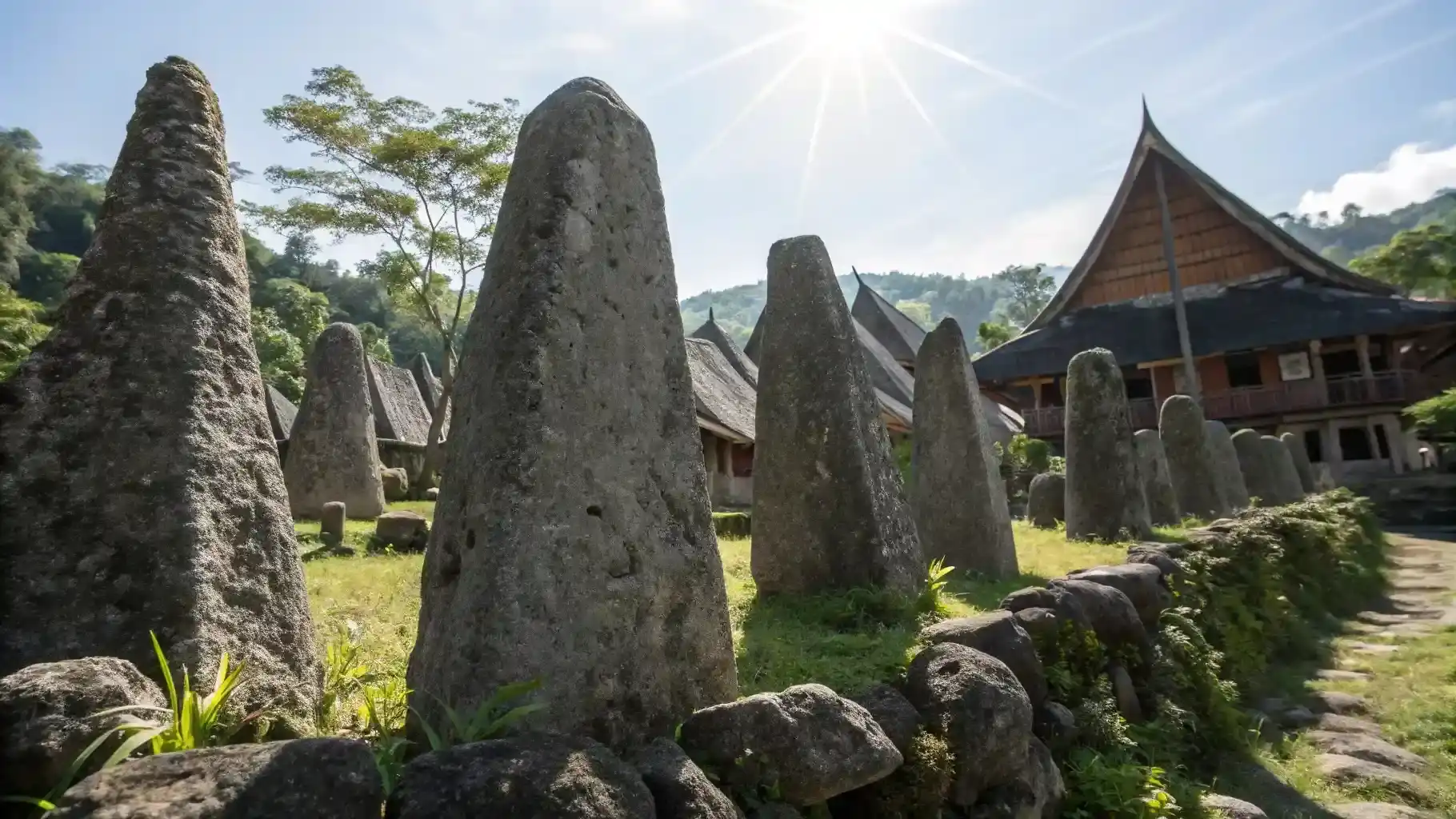
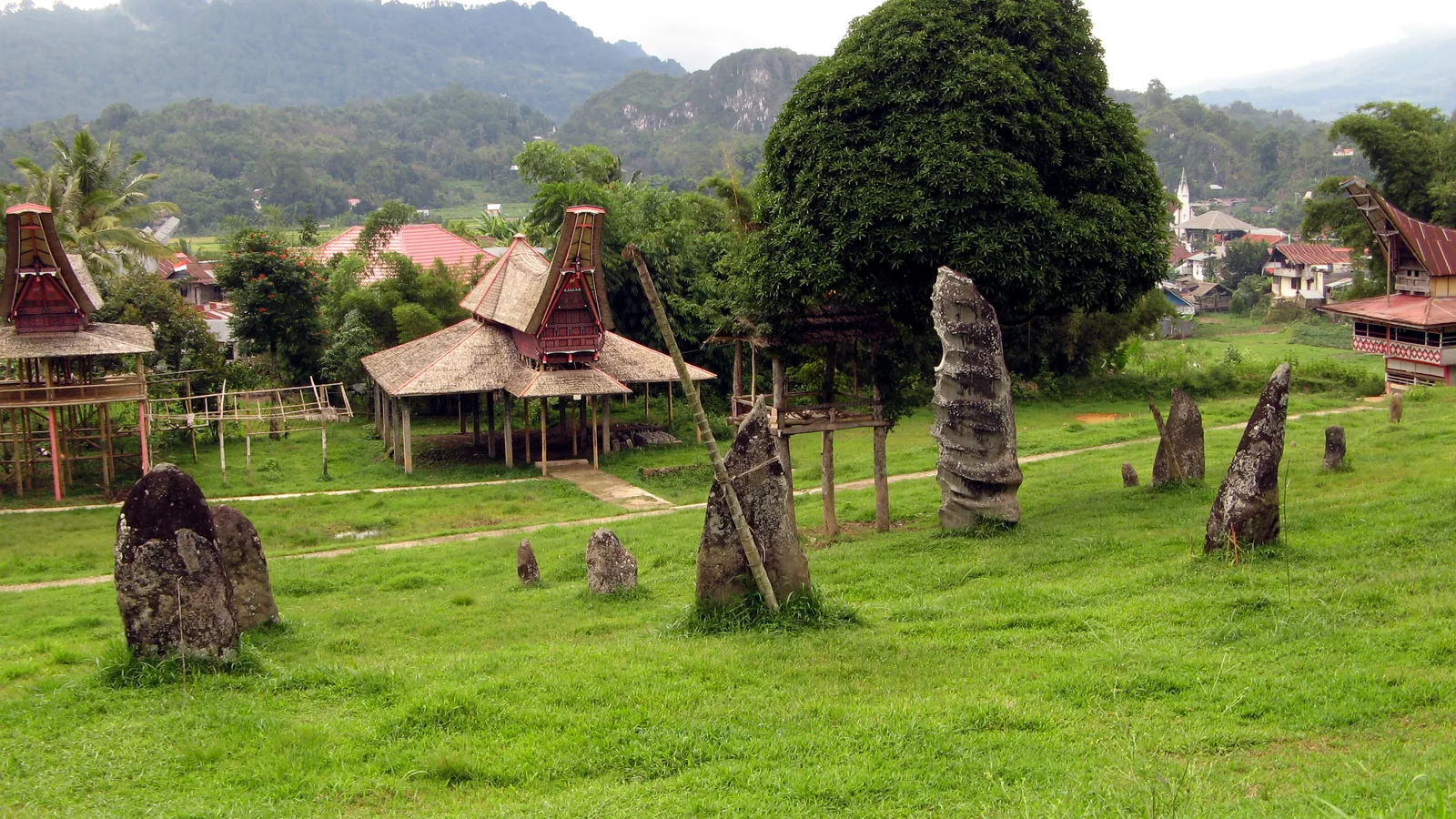
Bori Kalimbuang is one of the most important ceremonial sites in Tana Toraja — a field of 102 menhir (standing stones) erected over centuries to commemorate the funeral ceremonies of Toraja nobles. It is less visited than Kete Kesu or Lemo but offers a unique and powerful experience.
What Are the Menhir?
Each menhir at Bori Kalimbuang was erected following the completion of a grand funeral ceremony (rambu solo) of a high-ranking Torajan. The stone symbolises the elevated status of the deceased and the scale of the ceremony performed. The 102 menhir span approximately 400 years of history, with the oldest dating to the 17th century.
The Ceremonial Ground
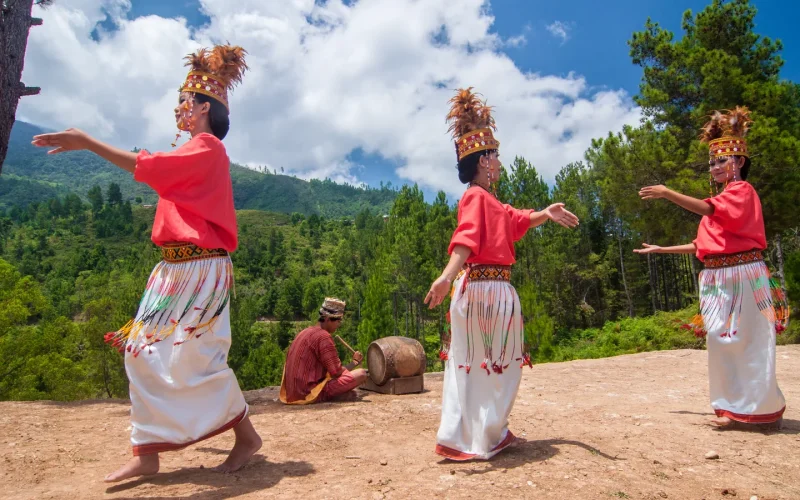
Bori Kalimbuang is not purely a historical site — it remains a functioning ceremonial ground. Ma’bua’ (thanksgiving) ceremonies and other important rituals continue to be held here. When a ceremony is in progress, the menhir field is surrounded by traditional structures and the air fills with singing and gamelan.
The Tongkonan of Bori
Adjacent to the menhir field are a group of traditional tongkonan (ancestral houses) belonging to the noble family that owns the Bori site. These are among the most ornate in the Rantepao area, with deeply carved facades depicting buffalo horns (sign of wealth) and geometric patterns.
Practical Information
- Location: Approximately 12 km north of Rantepao
- Entry fee: Small fee charged at the gate
- Best time: Morning for best light; check with TourtoRaja whether a ceremony is scheduled
- Time needed: 1–1.5 hours
Travel times, flight schedules, opening conditions, ceremony dates and prices change. Confirm the details that matter to your trip when you enquire.